See how Flash Forest is accelerating reforestation across Canada. Download our latest Impact Report

Solutions
Company
Resources


501 Alliance Avenue Toronto, ON, M6N 2J1 Canada
INFO@FLASHFOREST.CA
See how Flash Forest is accelerating reforestation across Canada. Download our latest Impact Report
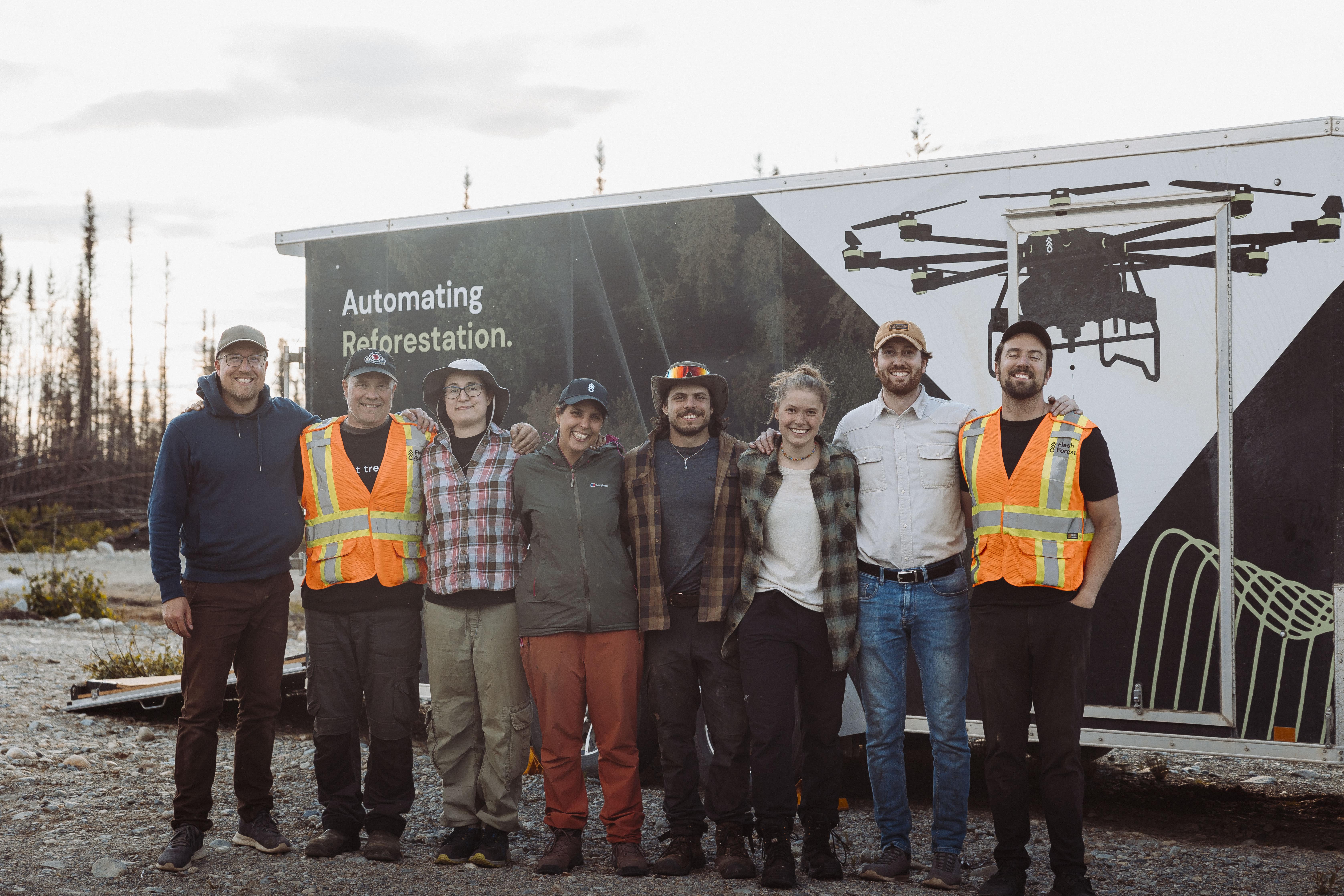
Reforestation can employ a range of delivery methods, each with its own set of strengths and weaknesses and each suited to different site conditions. Crews plant seedlings by hand, aircraft seed from above, and drones such as Flash Forest's deploy seed pods directly into the soil. The ‘thing’ being planted varies as well, ranging from nursery grown saplings to bare seed to engineered seed pods built for automated deployment.
Despite this range of methods, success or failure in every planting project depends on a multitude of conditions. Soil type, precipitation levels, temperature, slope, and weather patterns determine what survives its first season, regardless of how it reaches the ground. Companies serious about innovating here have to keep chasing the variables that govern regeneration, at both the macrosite and the microsite scale. When we started, we treated mean summer precipitation as the primary signal for whether a site would take to seeding. Seven years and more than 15,000 hours of field work later, we've learned it was only one thread in the tapestry. Insolation. Species mix. Shade. Slope. Groundwater tables. Soil moisture. Competing ground vegetation. Each one pulls on the outcome, and each one is measurable if you're willing to go and measure it.
Even with careful site selection and a method matched to the conditions, full establishment is never guaranteed. Working within a living system means accepting a margin you do not control. But the odds move, and they move considerably, for anyone who treats a forest as something to be understood rather than something to be filled. The role of a reforestation company is to match the right combination of method and medium to the environment it operates in. There is no universal answer that applies across every site, climate zone, or disturbance history. This is why research and development remains critical work each season, expanding what the right combination means as new site and climate data comes in.
-min.avif)